राष्ट्रिय
After Nepal Flash Flood, Sikkim Steps Up Himalayan Lake Risk Preparedness
Bishnu Neopaney/ Homnath Dawari
२०८३ श्रावण २४, शनिबार
१०:१५ बजे | अद्यावधिक: १०:४५
544 पटक हेरिएको
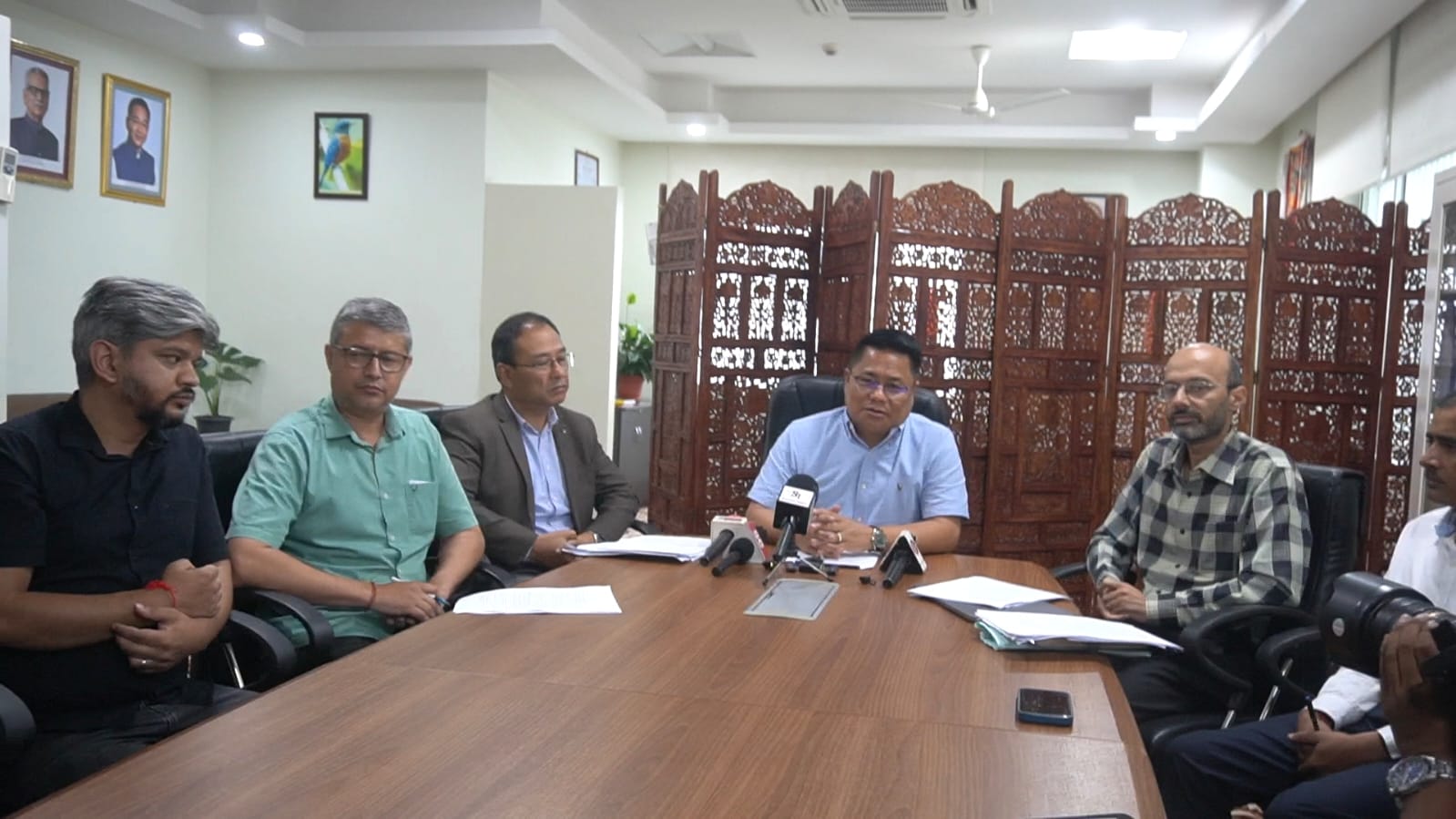
Gangtok, September 1: In the wake of the devastating flash floods reported in Nepal last week, the Sikkim Government has stepped up preparedness measures against potential glacial lake outburst floods (GLOFs) and other hazards originating from the state’s glacier-fed lakes and river systems.
The Department of Science and Technology and Climate Change has completed multiple phases of studies on high-risk glacial lakes in Sikkim and identified three key measures for reducing potential risks. The department has maintained that current assessments do not indicate any immediate major threat, while stressing the need for continuous monitoring and preparedness against future natural disasters.
Minister for Science and Technology Pincho Namgyal Lepcha, Principal Secretary Dr Sandeep Tambe, Secretary Dhiren Shrestha and senior officials outlined the government’s preparedness measures during a press conference on Monday.
According to the department, the National Disaster Management Authority (NDMA) has identified 189 high-risk glacial lakes across the Indian Himalayas, including 40 in Sikkim. Of these, 16 have been categorised as high-risk, while 13 remain unclassified.
The department’s three major risk-reduction proposals include construction of a flood-control structure near Dolma Sampa, close to Muguthang, to regulate potential flood flows from the South Lhonak, North Lhonak and Changsang lake group. A preliminary project report has already been submitted to the Ministry of Jal Shakti, with the detailed project report under preparation.
The second proposal involves lowering the water level of Shako Cho Lake using a solar-powered pumping system. The detailed project report has been submitted to the NDMA and funding is awaited.
The third proposal focuses on Gurudongmar, where a morainal protective structure has been proposed at the lake’s outlet. While the lake itself is not considered an immediate major risk, officials said two large glacial lakes located upstream could pose a potential threat.
The department said five major field studies have so far been conducted, with 13 of the 16 high-risk lakes already assessed. Studies have examined water volume, water levels, potential flow paths, landslide and avalanche risks. Some lakes were found to contain as much as 17–18 million cubic metres of water.
Officials said automatic weather stations have also been installed in vulnerable areas to facilitate regular monitoring of weather conditions and lake water levels.
Minister Lepcha urged residents living along river and stream corridors to remain vigilant, stressing that the timing of natural disasters cannot be predicted.
The department is also continuing public awareness initiatives, while the report of the Sikkim Glacier Risk Commission, headed by Dr Akhilesh Gupta, is in its final stage.
Officials reiterated that while no immediate major threat has been identified, changing climatic and geographical conditions in the Himalayan region make continuous monitoring, early warning systems, scientific studies and structural mitigation measures essential for Sikkim’s long-term disaster preparedness.
अनलाइन् खबर पत्रिका तथ्य जाँच र आचारसंहिता प्रतिवेदन:
यो सामग्री हाम्रा सम्पादक टोलीद्वारा तथ्य प्रमाणीकरण र प्रेस काउन्सिल अफ इन्डिया आचारसंहिता बमोजिम प्रकाशित गरिएको हो।