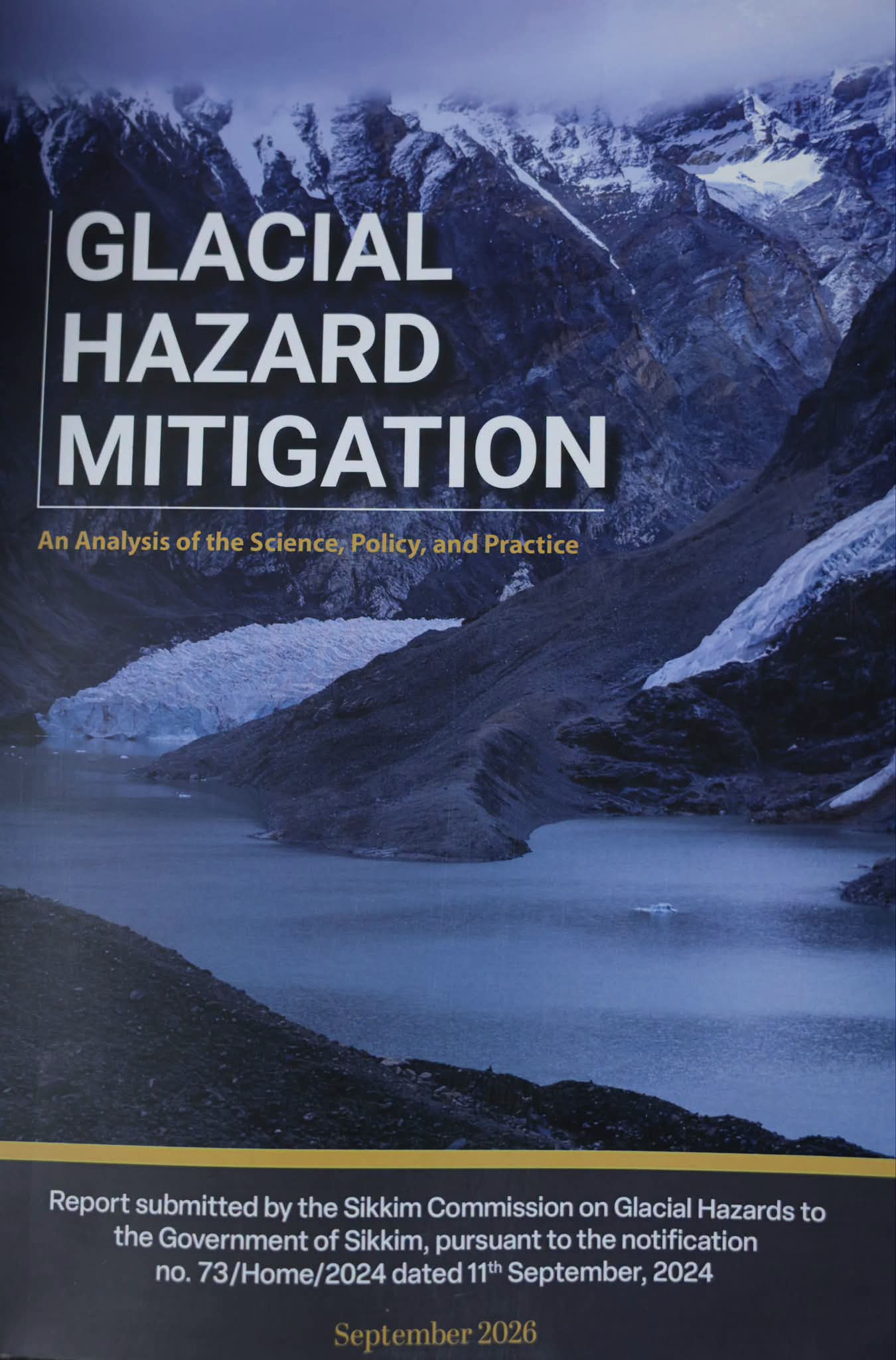
Gangtok, September 12: The Government of Sikkim has received a comprehensive report on glacial hazards, nearly three years after the catastrophic South Lhonak Glacial Lake Outburst Flood (GLOF) devastated parts of the Himalayan state and exposed its vulnerability to climate-driven disasters.
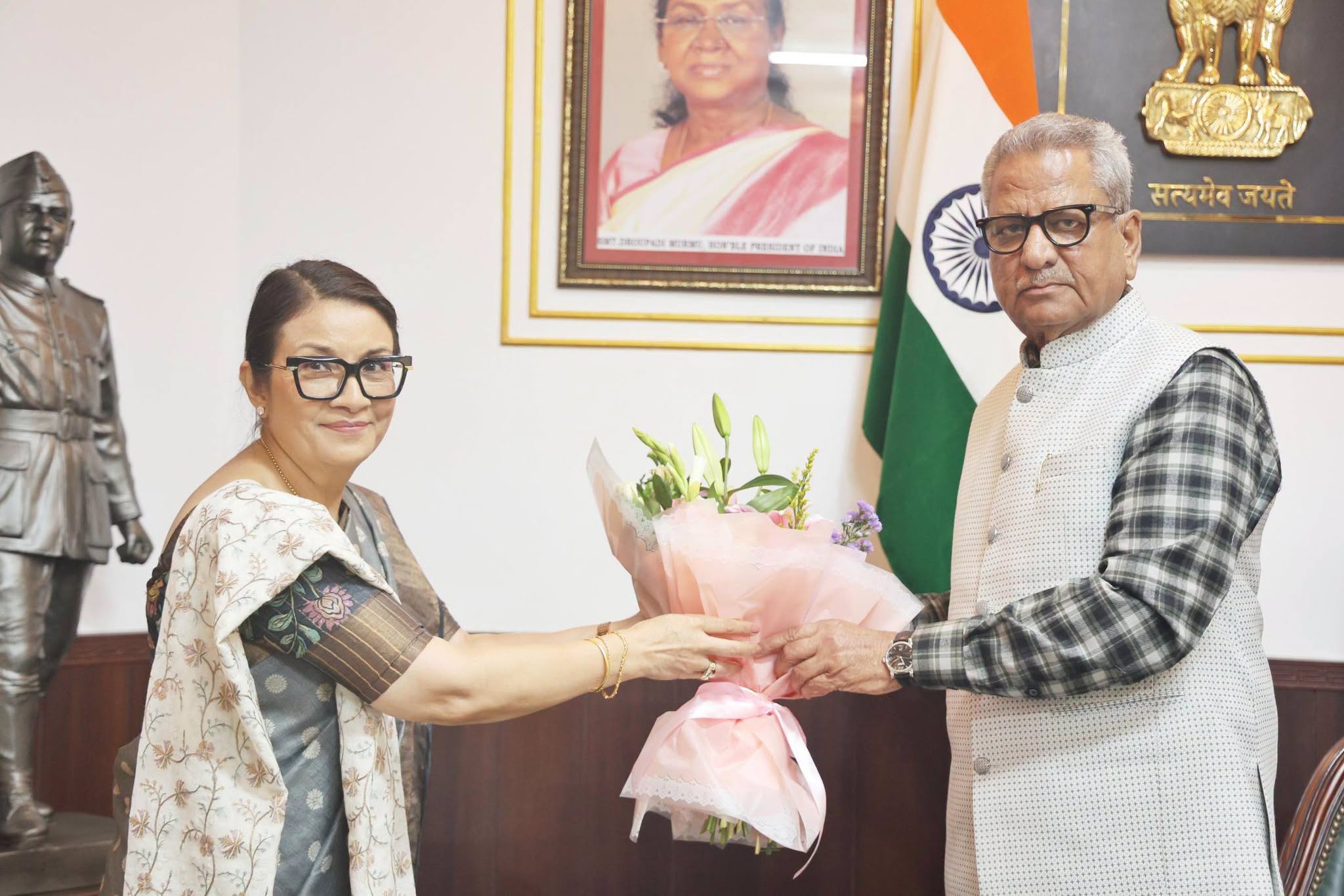
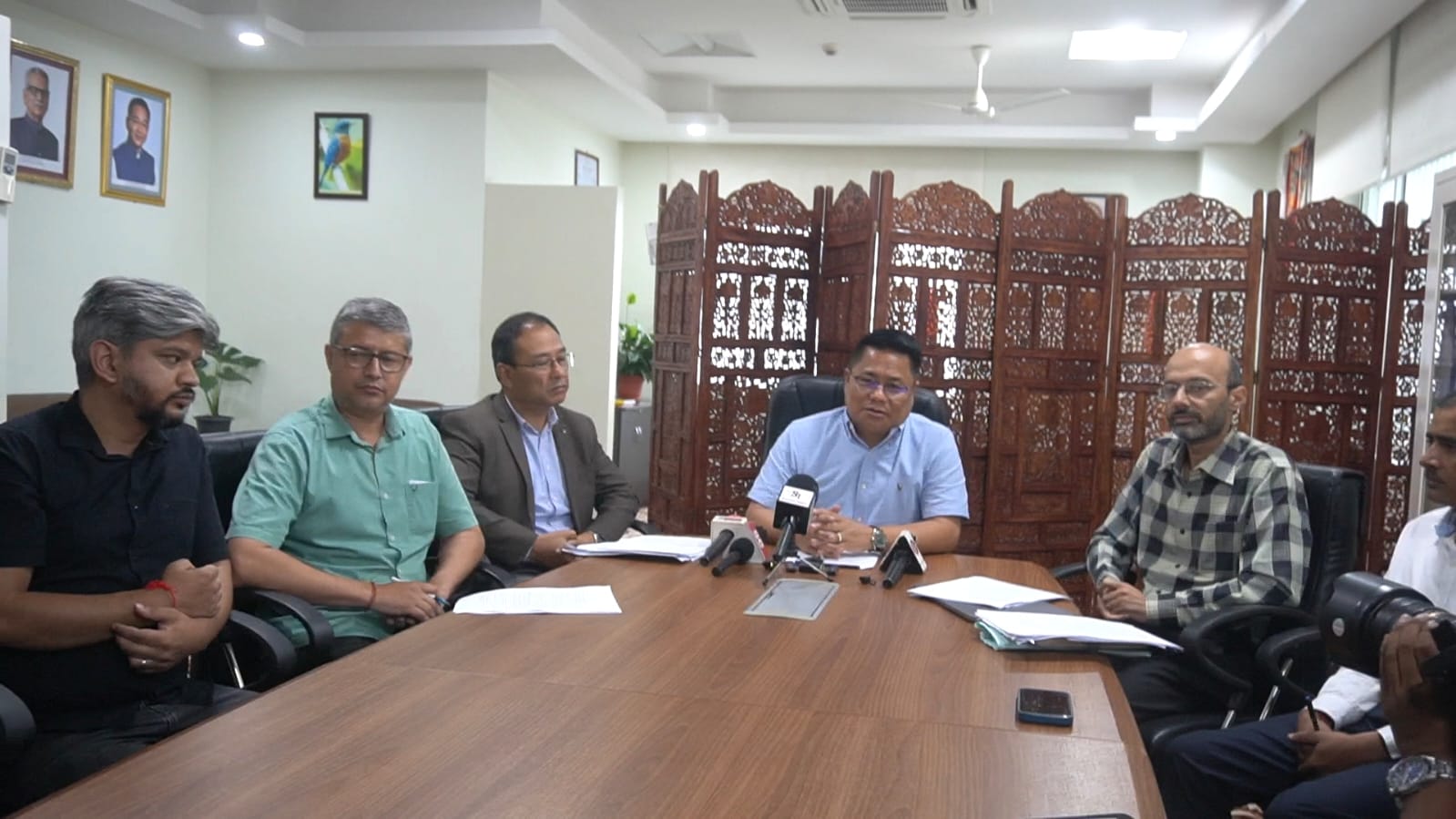
Chief Minister Prem Singh Tamang received the report from the Commission on Glacial Hazards, Sikkim, led by its Chairperson Dr Akhilesh Gupta, in the presence of Forest and Environment Minister Pintso Namgyal Lepcha.
The State Government constituted the Commission on September 11, 2024, in the aftermath of the October 2023 South Lhonak GLOF, one of the most destructive recent natural disasters in Sikkim. The Commission was tasked with preparing a comprehensive strategy and roadmap to mitigate glacial hazards and strengthen the state's preparedness for future events.
The Commission has made eight major recommendations, focusing on strengthening preparedness, resilience and response mechanisms against glacial hazards. The recommendations are also intended to position Sikkim as a model Himalayan state for glacial-risk mitigation.
The report assumes particular significance for Sikkim as the state continues to grapple with the aftermath of the 2023 disaster. The GLOF caused extensive destruction along the Teesta river system, damaging roads, bridges, power infrastructure and settlements. Restoration of connectivity and rehabilitation of affected communities have remained among the most difficult challenges facing the state.
For a mountainous state where roads and bridges are lifelines for remote communities, the destruction of critical infrastructure has consequences extending far beyond the immediate disaster. Rebuilding is complicated by difficult terrain, fragile mountain ecosystems and the growing threat of extreme weather and glacial hazards.
The South Lhonak disaster also brought international attention to the risks posed by rapidly changing Himalayan cryosphere systems. Rising temperatures and changing precipitation patterns are increasing concerns over the stability of glaciers and glacial lakes across the Hindu Kush Himalaya.
Receiving the report, the Chief Minister congratulated Dr Gupta and members of the Commission for their expertise and work towards strengthening the safety and security of the people of Sikkim.
He said the government would take forward the recommendations with determination and a spirit of collective responsibility, with the objective of building a safer, more resilient and climate-conscious Sikkim.
The report now provides the state with a framework to move from post-disaster recovery towards long-term risk reduction—an increasingly urgent task as Sikkim seeks to rebuild its damaged infrastructure while preparing for the next generation of Himalayan climate hazards.
अनलाइन् खबर पत्रिका तथ्य जाँच र आचारसंहिता प्रतिवेदन:
यो सामग्री हाम्रा सम्पादक टोलीद्वारा तथ्य प्रमाणीकरण र प्रेस काउन्सिल अफ इन्डिया आचारसंहिता बमोजिम प्रकाशित गरिएको हो।