राष्ट्रिय
Sikkim HC Turns Focus to Glacier Lake Vulnerability, Climate Disaster Preparedness
Bishnu Neopaney
२०८३ श्रावण २४, शनिबार
१०:१५ बजे | अद्यावधिक: १०:४५
317 पटक हेरिएको
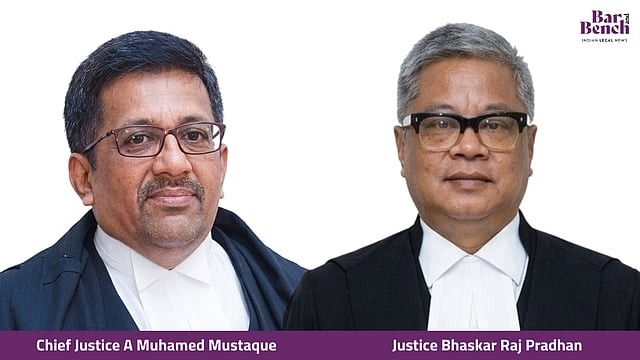
Gangtok, September 17: The vulnerability of glacier lakes and the need for stronger preparedness against glacial and climate-induced disasters have come under judicial focus, with the High Court of Sikkim initiating suo motu proceedings on “Climatic Justice in Sikkim”.
A Bench headed by Chief Justice A. Muhamed Mustaque has called for a shift from a reactive disaster-management approach to an anticipatory and participatory model of climate governance, particularly in view of Sikkim’s exposure to glacial hazards and its experience of the devastating South Lhonak Glacial Lake Outburst Flood (GLOF) in 2023.
In its September 17 proceedings, the Court observed that floods, landslides and other climate-related disasters are not unfamiliar to Sikkim and said the State’s institutional preparedness to anticipate, mitigate and respond to such risks needs examination.
The Court’s focus extends to the vulnerability of communities and habitations located in areas exposed to glacial hazards, landslides and floods, raising questions over whether adequate mechanisms are in place to identify high-risk areas and prevent avoidable loss of life and property.
The Court clarified that the proceedings are not aimed at adjudicating the causes of climate change or entering into the wider scientific debate, but at examining whether the State has adequate systems to prevent climate-related disasters and minimise their impact on human life, habitation, livelihoods and the environment.
“Climate justice requires that the State does not wait for a disaster to occur before responding,” the Court observed, emphasising anticipation, preparedness, mitigation and resilience.
The experience of the South Lhonak GLOF, which caused extensive destruction in Sikkim in October 2023, has brought particular significance to the issue of glacier-lake vulnerability in the Himalayan state. The Court’s proceedings seek to examine broader institutional mechanisms that could help anticipate and mitigate risks arising from such hazards.
The Court has proposed to hear the State and other stakeholders on mechanisms for identification of vulnerable areas, early-warning systems, disaster preparedness, climate-resilient construction, spatial planning, protection of vulnerable communities, rehabilitation and long-term climate resilience.
It also pointed to the need to revisit building engineering, land-use regulation, slope management, drainage, road construction, settlement planning and rehabilitation in ecologically and geologically fragile areas.
The Court observed that vulnerable communities may bear a disproportionate burden, particularly people living in hazard-prone habitations, those dependent on fragile mountain ecosystems and communities repeatedly displaced by landslides and other natural hazards.
Repeated displacement, it noted, raises concerns beyond conventional disaster management, including dignity, livelihood, habitation, continuity of community life and access to basic necessities.
The Bench has not framed specific issues for adjudication at this initial stage and instead proposed to hear the voices of stakeholders, including vulnerable communities, people living in climate- and geological-risk areas, scientific experts and the next generation.
Observing that the Himalayan ecosystem has unique geographical, geological and climatic vulnerabilities, the Court said development, construction and spatial planning must adequately account for these conditions.
“The question before us, therefore, is not merely what should be done after a disaster, but what can and must be done before one occurs,” the Court observed.
The proceedings are thus expected to examine whether Sikkim’s existing disaster-management and early-warning framework is sufficiently equipped to address glacial lake and other climate-related risks before they translate into disasters, while strengthening long-term resilience of vulnerable Himalayan communities.
अनलाइन् खबर पत्रिका तथ्य जाँच र आचारसंहिता प्रतिवेदन:
यो सामग्री हाम्रा सम्पादक टोलीद्वारा तथ्य प्रमाणीकरण र प्रेस काउन्सिल अफ इन्डिया आचारसंहिता बमोजिम प्रकाशित गरिएको हो।